Folio 152a
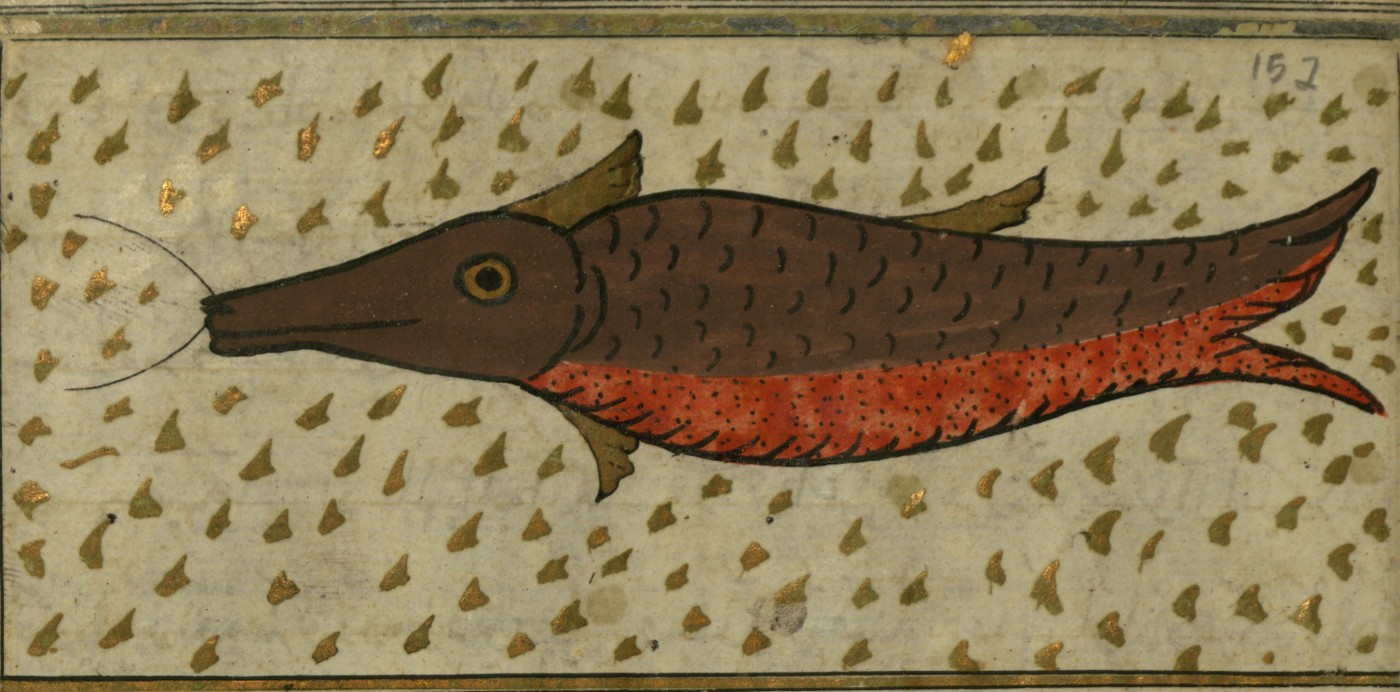
There is also a kind of fish called Silan(?). When caught, it stays alive on land for three days. If it is put in a pot with the lid on, it cooks; but if the pot is left uncovered, it escapes, however strong the fire.*1
There is also a kind of crab, a span in length. When it is caught and taken out of the net, it turns to stone by God's command. Oculists(?) put it into their remedies.*2
There is also the musk animal. At a fixed time it comes out of the sea, and then they hunt it. Musk is found in its navel. In that country, however, it has no scent at all; only when it is carried to another country does its scent appear.*2*3
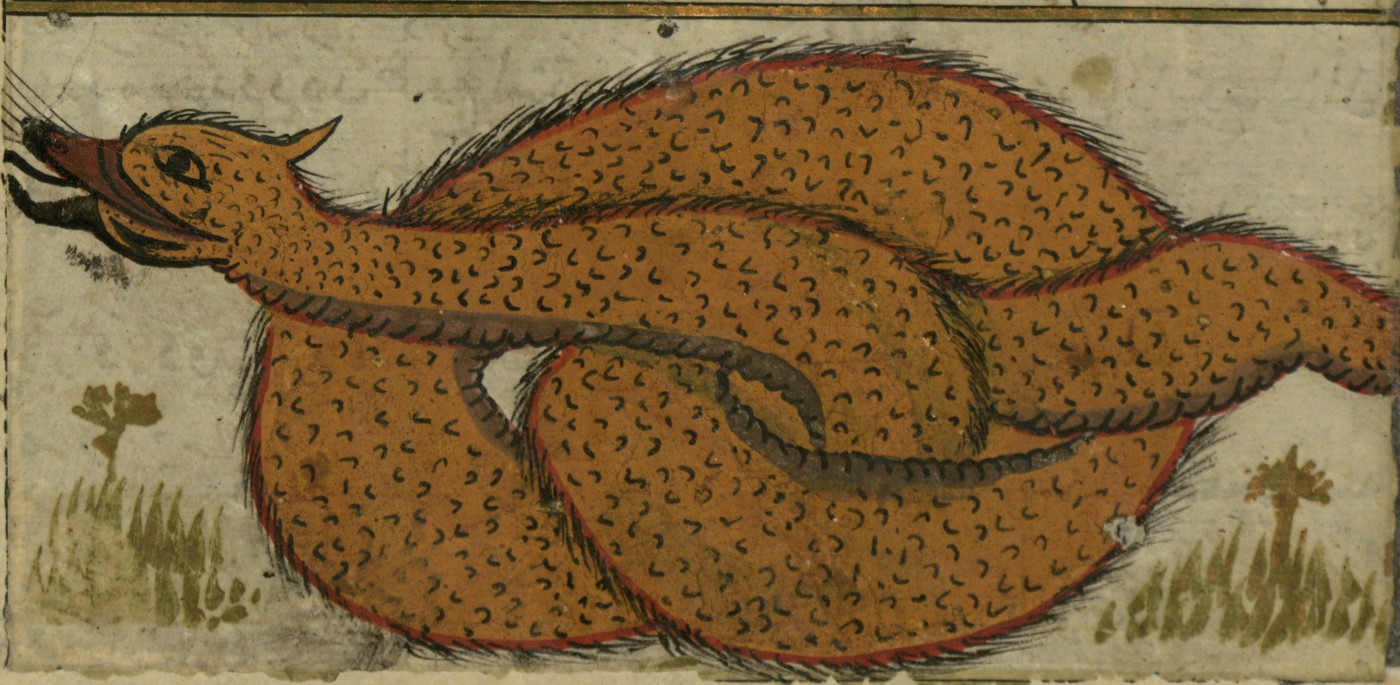
On that island too there are snakes of enormous bulk; they swallow elephants and buffalo. When the bones pain it in its belly, the snake rubs itself against the rocks until its belly bursts and it dies. The sound of its belly is heard from far away; the people then know it has died, and go to look at it.*3
Here is its picture.
* Needs human approval · 3
- *1line 1
سیلانother readings:سیلآن,سیلاںBalığın adı. Harfler س ی ل ا ن olarak açık; ل ile ا üzerinde küçük bir halka/med işareti var. Hangi Arapça adın karşılığı olduğu (Kazvînî'deki balık maddesi) tespit edilemedi. Çeviride 'Sîlân(?)'. - *2line 5
كحالنother readings:كحاللر,كحاللنك ح ا ل + son harf ن kâsesi gibi; ikinci bir ل dişi olabilir. 'kehhâlân' (Fars. çoğul, göz hekimleri) okundu; taşlaşmış yengecin göz ilacı olarak kullanılması anlamla uyumlu ama kelimenin yazılışı kesin değil. - *3line 8
اول جزیره'O ada' bu varakta adlandırılmıyor; ada adı önceki varakta (151b) geçmeli, çeviride ad verilmedi. Aynı satırdaki siyah mürekkepli وینه açıkça 've yine' (ardından 'ol cezîrede'): bir ad değil. Walters kataloğunun 'Vaynah (Vīnah?) Island' başlığı muhtemelen bu kelimenin ad sanılmasından doğuyor (bkz. 151b L8 kırmızı وینه). Adanın kimliği 151b'ye göre insan tarafından belirlenmeli.
Resolved or approved · 5
- resolvedline 1
بردهother readings:بر ده (bir de)ÇÖZÜLDÜ. 'berr-de' = karada (Ar. berr 'kara'). 'Avlansa karada üç gün sağ kalır' bağlamı bunu gerektiriyor; 'bir de' okuması cümleyi bozuyor. - resolvedline 4
حچانother readings:چآن,جانÇÖZÜLDÜ. 3x büyütmede ح başının altında چ gövdesi ve nokta, ardından medli elif ve ن görülüyor: eski Anadolu Türkçesi 'haçan' (ne zaman ki). Cümle yapısı ('haçan ... hurûc etse ... taş olur') bunu doğruluyor. - resolvedline 6
سرّهسندنother readings:سره سندنÇÖZÜLDÜ. Şeddeli 'surre' (göbek) + -sinden; miskin hayvanın göbeğinden çıkması bilinen anlatıyla örtüşüyor. - resolvedline 9
سوردكنother readings:سوردكدهÇÖZÜLDÜ (anlam). Yazılış açıkça سوردكن; 'sürdüken' = sürterken. Eski zarf-fiil biçimi diplomatik olarak korundu, anlam bağlamdan kesin. - resolvedline 11
صورتهÇÖZÜLDÜ. Kırmızı 'sûretühu' (onun resmi): hemen altındaki yılan resmine işaret ediyor. Üstteki balık resmi metinden önce yer alıyor; Walters kataloğu iki resmi de bu varağa ('A fish and a large snake') bağlıyor (ada adı kısmı şüpheli, bkz. L8) ve varakta anlatılan tek balık 1. satırdaki Sîlân(?).