Folio 156b
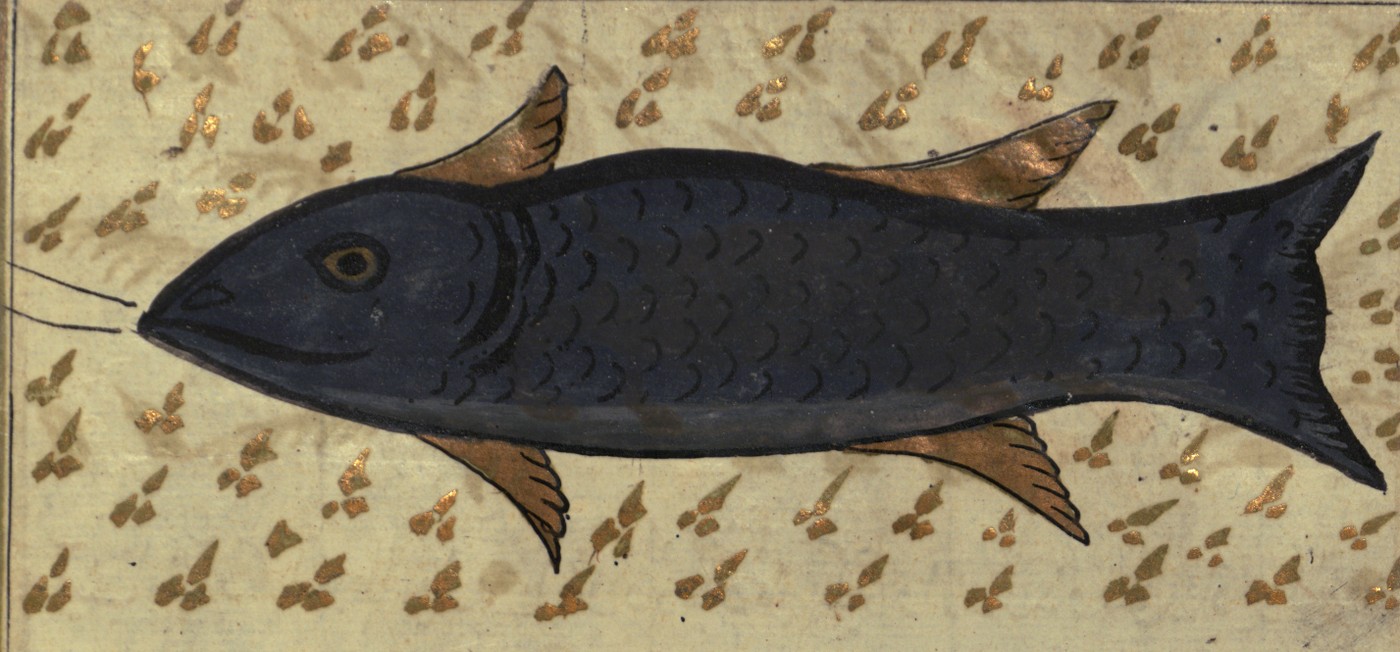
Again, in that sea there is a green fish; its head is like a snake's head, and its body is a fish's. If someone eats of its flesh, he is freed from food and never wants food again.
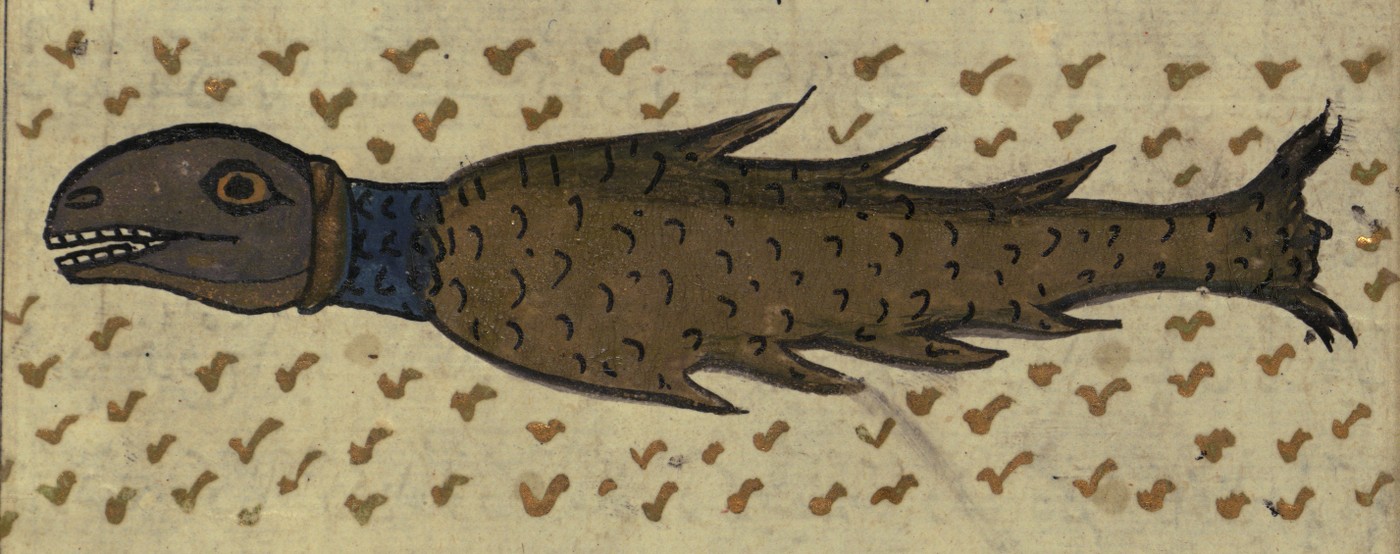
And here is its picture.
Again, in that sea there is a round fish; they call it gâv-mâhî ("ox-fish"). Its head is an ox's head; on its back is a shaft (?) a cubit long; whatever kind(?) of animal it meets, it kills.*1
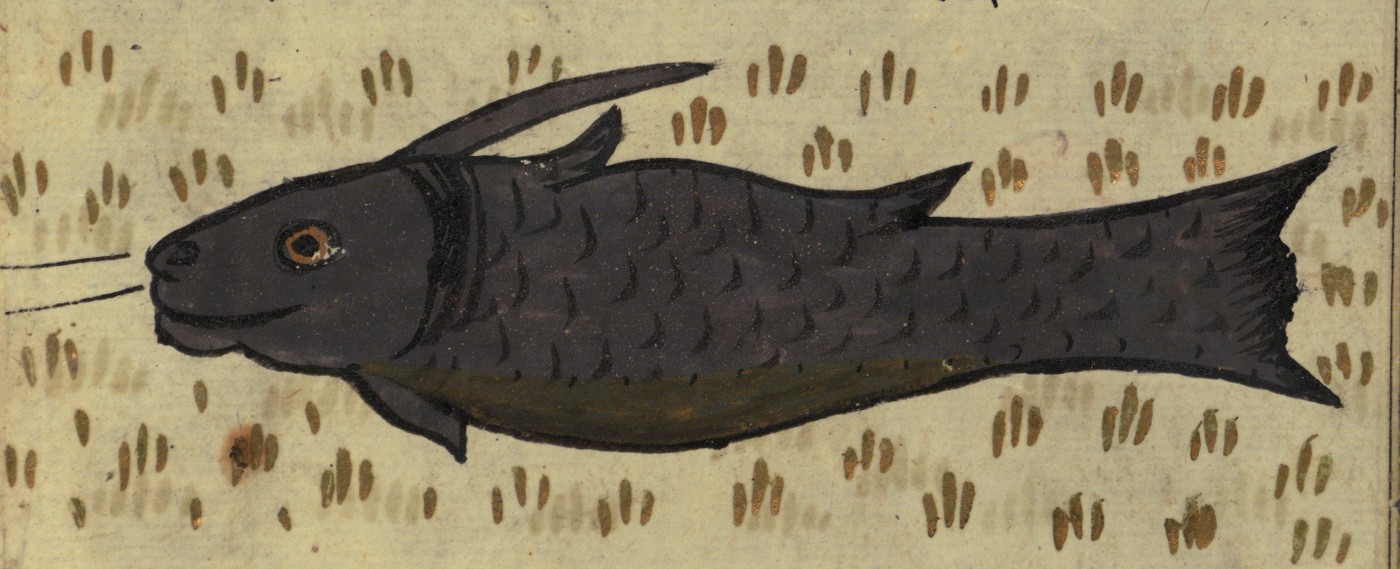
Here is its picture.*1
Were all the kinds of creatures in that sea to be described, books and registers could not contain them; this much has sufficed.
The Sea of Fars is a branch of the Sea of India. It is a sea rich in good things and plenty, and its fear and danger are slight compared with the other seas.
Muhammad ibn Zakariyya says: The Sea of Fars adjoins the Sea of India and is a branch of it; but its conditions … the Sea of India…*2
continues on fol. 157a…is contrary: when the surface of the Indian sea…* Needs human approval · 2
- *1line 4
نزother readings:تیز (tîz, sivri),تز (tez),نه (ne makûle = ne türlü)عمود'dan sonra ayrı bir kelime: tek diş + ز. Üstündeki nokta sayısı seçilemiyor. 'tîz/tez' (sivri bir direk) ya da 'ne' (ne makûle hayvâna = ne türlü hayvana) olabilir; ikincisinde ز açıklanamıyor. Anlam (sırtında bir arşınlık diken, rast geldiği hayvanı öldürür) açık, kelime değil. Harfiyen korundu. - *2line 8
محمد بن ذکریاother readings:زکریاİsim ذ ile yazılmış (harfiyen korundu). Kazvînî'nin Fars Denizi bahsinde alıntıladığı Muhammed b. Zekeriyyâ er-Râzî mi, yoksa yazar adının (Zekeriyyâ b. Muhammed el-Kazvînî) ters çevrilmesi mi? Metin yalnız 'Muhammed bin Zekeriyyâ' diyor; kimlik notu eklenip eklenmeyeceğine insan karar vermeli.
Resolved or approved · 7
- resolvedline 1
وینهother readings:و ینه = ve yine,Vîne (ada adı)ÇÖZÜLDÜ: Kırmızı, paragraf başı; 1. ve 3. satırda 'وینه اول دریاده' kalıbı, 5. satırdaki 'ودخی اول دریاده' ile tam paralel. 'Ve yine o denizde' okunuyor; ada adı değil. Walters'ın 'Vaynah (Vīnah?) Island' başlığı bu kelimenin ada adı sanılmasından doğmuş görünüyor; bu sayfada hiçbir ada adı yok, konu 'o deniz' (Hind/Zenc denizi) ve ardından Bahr-i Fâris. - resolvedline 1
یشیلother readings:بیشیلÇÖZÜLDÜ: Büyütmede ی + üç dişli ش + ی + ل; başta ayrı bir ب dişi yok. 'yeşil'. Resimdeki balık (2. resim) zeytin-kahverengi; eski Türkçede yeşil koyu/zeytuni tonları da kapsar. - resolvedline 3
کاوماهیother readings:گاوماهی,کا وماهیÇÖZÜLDÜ: ک üstünde keşide yok (kâtip گ'yi ayırmıyor). Farsça gâv-mâhî 'öküz balığı'; hemen ardından 'başı öküz başı' gelmesi doğruluyor. Tek kelime gibi bitişik yazılmış. - resolvedline 4
بر ذراعÇÖZÜLDÜ: 'bir zirâ'' üzerine mürekkep bulaşmış (silme/leke); harfler lekenin altından seçiliyor ve ardından gelen 'مقداری' ölçü bekletiyor. - resolvedline 7
الخیرother readings:الحیرÇÖZÜLDÜ: خ noktası belirsiz (ح gibi de görünüyor), ama 'kesîrü'l-hayr ve bereketi çok' kalıbı kesin. - resolvedline 8
هندÇÖZÜLDÜ: Satır sonunda yer kalmadığından 'بحر'ın üstüne küçük yazılmış; 'Bahr-i Hind' olarak satıra dahil edildi. - resolvedline 9
مخالفدرother readings:محالفدرÇÖZÜLDÜ (157a ile teyit edilmeli): Eğik yazılmış ipucu kelimesi; خ noktası soluk. 'ahvâli Bahr-i Hind'e muhâlifdir' (hâlleri Hint Denizi'ne aykırıdır) cümleyi tamamlıyor. Gloss ve prose'a sonraki varağın kelimesi olduğu için eklenmedi.