Folio 166a
…when the time comes the sea begins to rise; at sunset the sea covers the church and it can no longer be seen at all. They say this too is a miracle of Jesus, peace be upon him.*1
In that place there are fish in the sea about a cubit long(?), and everyone catches them. When one looks, one finds written by divine power behind the right ear 'There is no god but God', on the nape 'Muhammad', and behind the left ear 'the Messenger of God'. People dry them for the blessing and keep them in their homes.*1
Abu Hamid also says: On that island I was making my ablutions on a stone at the seashore. From under the stone I was standing on came out a snake's tail, about a cubit long, yellow and covered in spots. I took fright and drew back. Then it brought out its head as well, like a hare's head, marked with yellow and black spots, and it began to swim in the sea. Its body was a (creature)(?) with five snake heads; each snake was three cubits long(?); [...](?) from its mouth one(?) caught(?).*2*3*4
Its head(?), when …, is soft, softer even than cotton and silk, yet iron makes no mark on it. They skinned it, and the skin was thinner than an onion's skin(?). I asked, and they said: 'It is called the water-hare, and we eat it.'*3*4
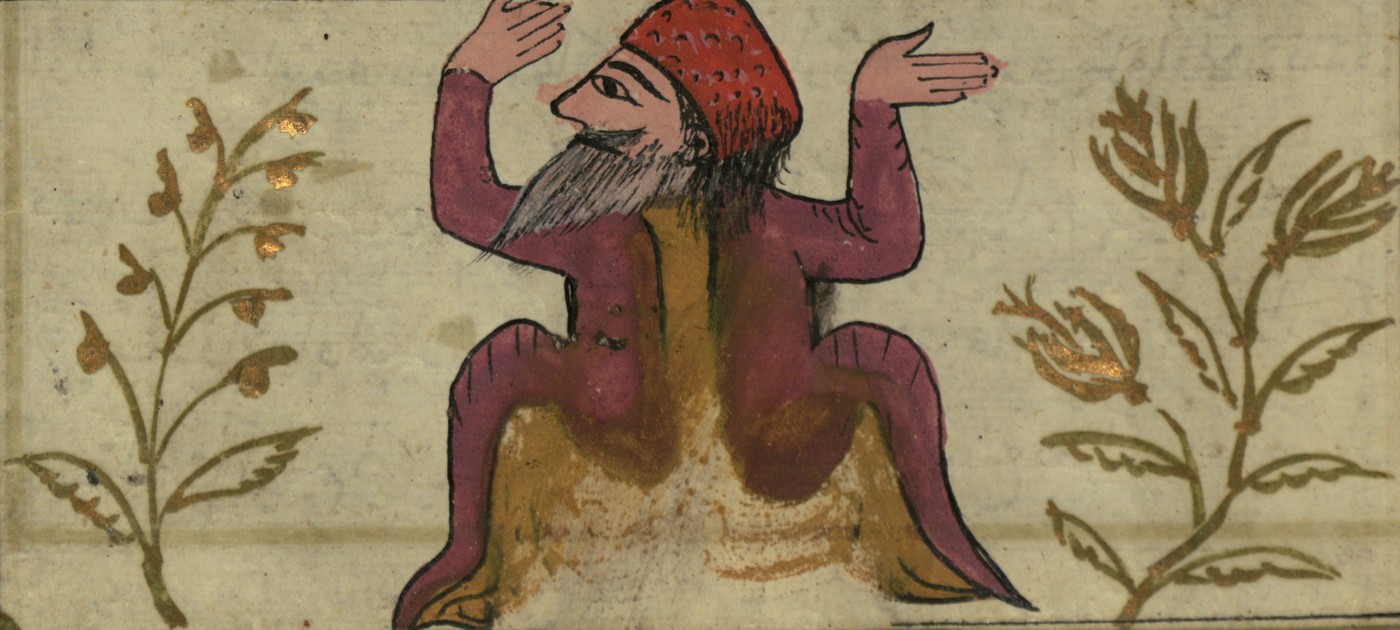
They said there is also another animal whose face is a man's face, with a white beard and two hands, but whose body resembles a frog. I asked, and they said: 'It is the Shaykh of the Jews.' It comes out of the sea on the night of the Sabbath (Saturday) and stays until sunset on the night of Sunday; when the sun sets it dives back into the sea. They said that if its skin is laid on someone suffering from gout, a quick cure follows at once. And this is its picture.
* Needs human approval · 4
- *1line 2
قدّنother readings:قدر,قدّنجهBELİRSİZ. Satır sonu kelimesi ق + د + şeddeli ن gibi okunuyor; 'kadar' beklenir ama son harf ر değil ن. L10'daki 'قدّنجه' (kaddınca, boyunca) ile aynı kökten 'kadd' (boy) olabilir: 'bir arş kaddın(?)' = bir arşın boyunda. Çeviride '(?)'. Bir insanın onayı gerekir. - *2line 9
بدنی بش یلان / باشلو برother readings:بدنی بش یلان باشلی,بدنی بیشBELİRSİZ. Harfler açık (بدنی بش یلان | L10 باشلو بر ۞) ama anlam kopuk: 'bedeni beş yılan başlı bir' sonrasında isim yok, hemen altın nokta geliyor. Bir kelime atlanmış olabilir. Çeviride '(?)'. Bir insanın onayı gerekir. - *3line 10
قدّنجه یا آغزندن بری صید ایتدیother readings:قدرنجه,یاغزندنBELİRSİZ. 'her yılan üç zirâ' kaddınca' (her yılan üç arşın boyunda) makul; ama 'یا آغزندن بری صید ایتدی' (ya ağzından biri avladı?) cümlesinin öznesi ve anlamı belli değil. Çeviride '[...](?)' ve '(?)'. Bir insanın onayı gerekir; Kazvînî Arapça metniyle karşılaştırılmalı. - *4line 10
باشیother readings:یاشی,پاشیBELİRSİZ. Satır sonu kelimesi, ilk harfin altında tek nokta: باشی (başı). L11 'اولدقده ملایم که...' ile birleşince 'başı ... olunca yumuşak' anlamı eksik kalıyor; 'یاشی' (yaşı, ıslakken) de düşünülebilir ama nokta tek. Bir insanın onayı gerekir.
Resolved or approved · 21
- resolvedline 1
کنیسهٔother readings:کنیسهیی,کنیسۀÇÖZÜLDÜ: son ه üstünde hemze; burada izafet değil, belirtme hâli 'kenîseyi' (kiliseyi deniz örtüp). 165b'deki kilise hikâyesinin devamı. - resolvedline 1
اودتوبother readings:اورتوبÇÖZÜLDÜ: ر=د alışkanlığı; örtüp. - resolvedline 1
کودنمزother readings:کورنمزÇÖZÜLDÜ: ر=د alışkanlığı; görinmez. - resolvedline 2
اولودother readings:اولورÇÖZÜLDÜ: ر=د alışkanlığı; olur. Aynı yazım L17'de de var. - resolvedline 2
ادشother readings:ارشÇÖZÜLDÜ: ر=د alışkanlığı; arş (arşın, dirsekten parmak ucuna ölçü). - resolvedline 3
سمکلوother readings:سمکلرÇÖZÜLDÜ: son harf و gibi görünüyor ama bu elin ر'sı (160b notu); 'semekler vardır' bağlamı kesin. - resolvedline 4
اوزدندهother readings:اوزرندهÇÖZÜLDÜ: ر=د alışkanlığı; üzerinde. - resolvedline 4
قفاسیother readings:قفاسی (kafası)ÇÖZÜLDÜ: Arapça kafâ = ense; sağ ve sol kulak arkasıyla birlikte sayıldığı için 'ensesi' diye çevrildi. - resolvedline 6
آلوددمother readings:آلوردمÇÖZÜLDÜ: ر=د alışkanlığı; alurdum (alıyordum). - resolvedline 8
پر نقطother readings:بر نقطÇÖZÜLDÜ: ilk harfin altında ikiden fazla nokta seziliyor; 'bir nukat' dilbilgisine uymaz, 'pür nukat' (benek dolu) sarı yılan kuyruğunun tarifi olarak oturuyor. L9'daki 'پر نقطه نقش اولنمش' ile aynı ifade. - resolvedline 8
کیرویهother readings:کیرو یهÇÖZÜLDÜ: giruya = geriye; 'kendümi giruya aldım' = geri çekildim. - resolvedline 11
بنبهother readings:پنبهÇÖZÜLDÜ: penbe = pamuk; 've harîrden dahi mülâyim' (pamuk ve ipekten de yumuşak) bağlamı kesin. - resolvedline 12
صوغان ظرفندن دقیقother readings:صوغان قشرندنÇÖZÜLDÜ: harfler açık; 'zarf' burada kabuk/zar anlamında: derisi soğan zarından ince. Çeviride anlam yine '(?)' ile işaretli. - resolvedline 12
ادنب ماءother readings:ارنب ماءÇÖZÜLDÜ: ر=د alışkanlığı; arneb-i mâ' = su tavşanı. L8'deki 'tavşan başı gibi' ile uyumlu. - resolvedline 12
ایدرزother readings:ایدرلرÇÖZÜLDÜ: son harf ز; L13 başındaki 'dediler' ile 'tenâvül ideriz dediler' (yeriz dediler) olarak tamamlanıyor. - resolvedline 13
اللریother readings:الکی,اللدیÇÖZÜLDÜ: ortadaki harf ل/ک arası, son harf ر/د; 'iki elleri vardır' bağlamı ve resimdeki iki el ile kesin. - resolvedline 13
وآردرother readings:وآرددÇÖZÜLDÜ: vardır; son harfler ر=د alışkanlığıyla yazılmış olabilir, anlam kesin. - resolvedline 14
شیخ یهودیدرother readings:شیخ یهود ایدرÇÖZÜLDÜ: Kazvînî'nin 'şeyhü'l-yehûd' denen deniz hayvanı (insan yüzlü, beyaz sakallı, kurbağa gövdeli, cumartesi çıkar); Walters başlığı 'A half-human, half-frog creature' ve resim uyumlu. Yazım 'یهودیدر/یهودیدد'. - resolvedline 15
سبت کیجهسی / احد کیجهسیother readings:cuma akşamıÇÖZÜLDÜ: harfler açık. Not: geleneksel sayımda 'sebt gecesi' cuma akşamını, 'ahad gecesi' cumartesi akşamını gösterebilir; çeviride metnin sözü korundu (cumartesi gecesi / pazar gecesi). - resolvedline 16
وایتدیلرother readings:و ایتدیلرÇÖZÜLDÜ: eski Osmanlıca 'aytdılar' (dediler); 'itdiler' (yaptılar) bağlama uymaz. - resolvedline 17
وهذه صودتهother readings:وهذه صورتهÇÖZÜLDÜ: kırmızı yazı; ر=د alışkanlığı, ve hâzihi sûretühu (ve bu onun suretidir).