Folio 171a
The creature said: 'O king, ever since this wall was first built I have dwelt in this place. Seven times it was built and seven times it was destroyed. God Most High revealed to me that if it were to be built once more, it must be in this age, and that the one who builds it would be of your form and appearance. Praise be to God Most High, the promise of the Truth has come to pass; this wall will now stand forever, until the Day of Judgement. May God Most High honour you in the hereafter.' So it spoke, and vanished.
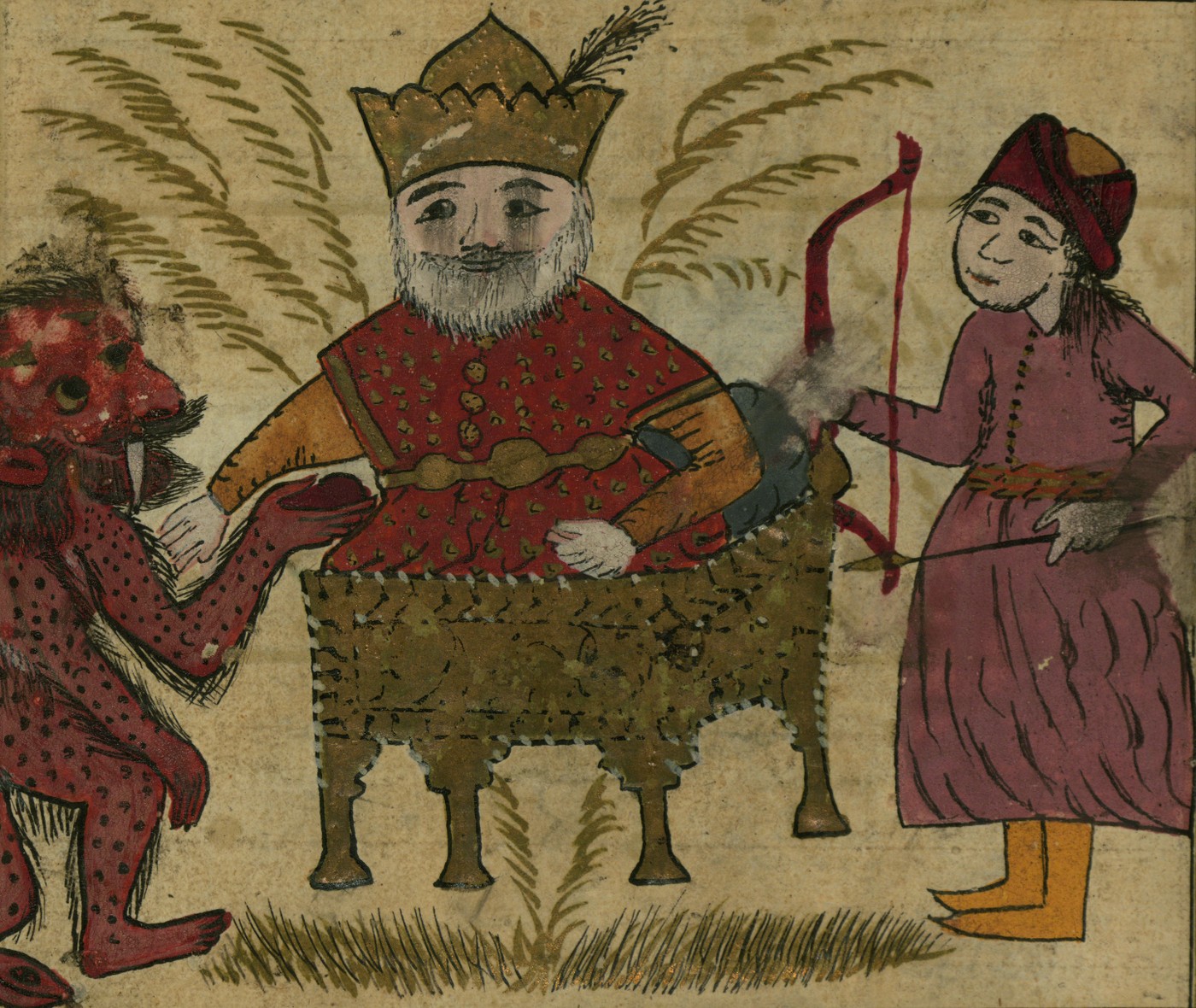
No one saw whether it flew into the air or sank into the sea. Anush[irvan](?), praising and glorifying God, came to the promenade(?). This is the picture of the two of them.*1*2
Section on the aquatic animals. An account of the animals in this section: the creatures made in the water are many.
Abu al-Su'ud (may God Most High have mercy on him) relates in his Qur'an commentary that the creatures on the face of the earth are one tenth of the creatures in the water; the creatures in the water are one tenth of the creatures in the first heaven; those [in the first heaven](?) are one tenth of those in the second; and so it goes until the seventh heaven. And all the creatures on the earth, in the seas and in the heavens are one tenth of the angels who circle the divine Throne. Their number and their kinds only…*3
continues on fol. 171b…God Most High knows.* Needs human approval · 3
- *1line 6
انوشother readings:انوشروان (Enûşirvân),انوش (Enûş, kısaltma)Harfler açık: yalnız 'انوش' yazılmış, ardından doğrudan 'حمد'. Seddi denize kadar yaptıran hükümdar Kazvînî'de Enûşirvân'dır (Bâbü'l-ebvâb/Derbend seddi); resimdeki taçlı hükümdar da bunu destekler. Kısaltma mı yoksa müstensih atlaması mı, 170b'deki ad geçişiyle karşılaştırılmalı; insan kararı gerekir. - *2line 6
سیرانهother readings:سراینه / سرایه (sarâyına / sarâya),سیرانه (seyrâna)Büyütmede: س, altında tek noktalı diş, ر, medli آ, üstte tek noktalı harf (ن), son ه. Harfler 'seyrâna' (gezintiye/seyir yerine) veriyor; ancak anlam olarak 'sarâyına geldi' (sarayına döndü) daha beklenen. ی noktası س-ر arasına düşmüş olabilir. İnsan kararı gerekir. - *3line 10
کوکده یother readings:کوکدهکی (gökdeki),کوکده (silinti)'کوکده'den sonra mürekkep sürtülmüş/silinmiş bir leke ve altı noktalı tek bir ی izi var. 'gökdeki' (ک silinmiş) olabilir ya da silinmiş bir kelimenin kalıntısıdır. Anlam (birinci göktekiler ikincidekilerin onda biri) değişmiyor; okuma insan onayı ister.
Resolved or approved · 8
- resolvedline 1
اولنیدother readings:اولندی (olındı),اولنیدیÇÖZÜLDÜ: satır sonunda sıkışık; ن, altı noktalı diş ve son harf د gibi, üstte hemze benzeri işaret. Karşılıktaki 'yedi kerre dahi harâb oldı' (L2) 'yedi kerre binâ olındı' okumasını kesinleştiriyor; ar yazıldığı gibi bırakıldı. - resolvedline 3
کرکدother readings:کرکدر (gerekdür)ÇÖZÜLDÜ: L3 ve L4'te aynı biçim: ک ر ک د, د üstünde ötre, ardından ر yok. Kısaltılmış/düşük 'gerekdür'; bağlam (olınsa gerekdür, kalsa gerekdür) kesin. - resolvedline 6
حقهother readings:(satır üstü ek)ÇÖZÜLDÜ: 'حقه' şeddeli, 'حمد'in üstüne küçük harfle satır üstü eklenmiş; okuma sırasında 'Hakka hamd ü senâ iderek'. ar'da bu sıraya konuldu. - resolvedline 8
کتورمشددکهother readings:کتورمشدرکهÇÖZÜLDÜ: ر=د alışkanlığı; getürmişdür ki. - resolvedline 9
اولکیother readings:اوکلیÇÖZÜLDÜ: büyütmede ا و ل ک ی; 'evvelki (birinci) gök'. L10 başında aynı kelime tekrar. - resolvedline 11
اوزره ددother readings:اوزره درÇÖZÜLDÜ: ز noktası belli ('üzre'); son kelime ر=د alışkanlığıyla 'dür'. - resolvedline 12
عشریدد وother readings:عشریدده,عشریدر دهÇÖZÜLDÜ: 'عشری' sonrası د ve د gibi iki harf (ر=د), ardından küçük kapalı bir halka. Halka و okundu: '''üşridür ve 'aded ü esnâfın'; ده okuması bağlama oturmuyor. - resolvedline 12
آنجقÇÖZÜLDÜ: satır sonu, çerçeveye dayalı; 'ancak'. Cümle 171b'de sürüyor (muhtemelen 'Allâh bilür'); işaret kelimesi yok.