Folio 172b
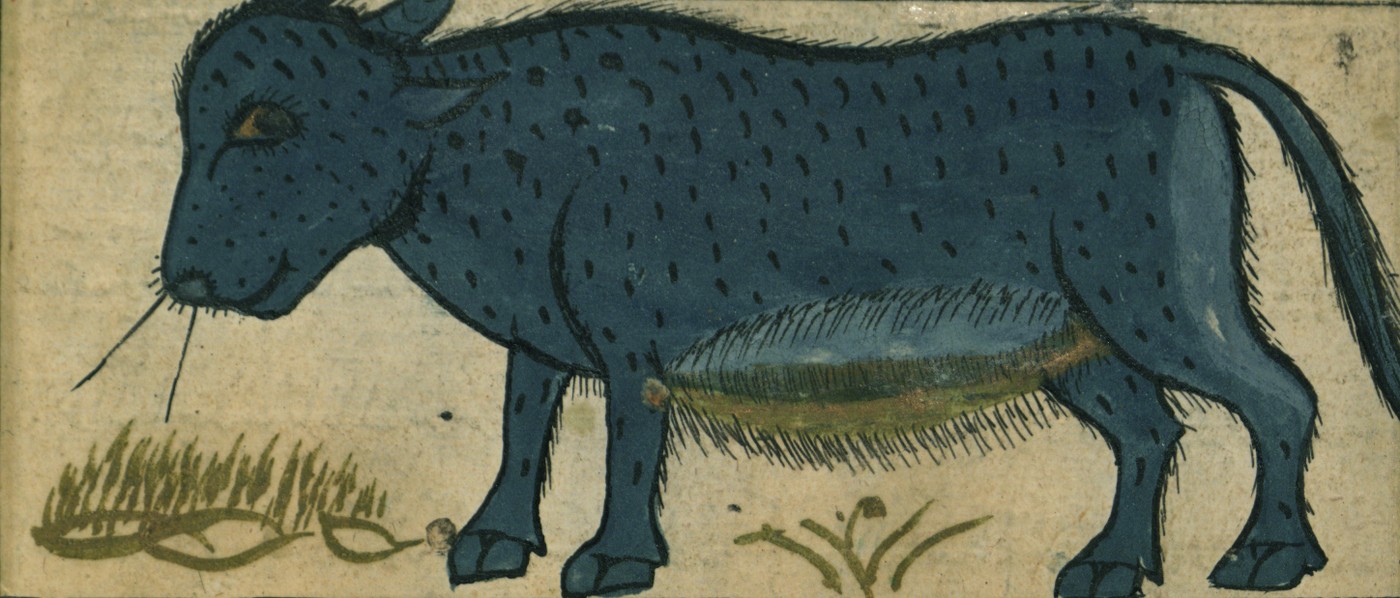
The bal is a kind of fish; it is fifty cubits long and does harm to ships. It eats whatever it finds. They say that at the bottom of the sea it swallows ambergris and perishes from its heat. At Basra, when the tide rises, it sometimes happens that the tide carries(?) this fish off; it cannot get back, and they catch it. It has so much fat that people burn it in lamps and get use from it for a long time.*1
The crocodile is an animal ugly to look at and evil to meet. In its mouth there are sixty teeth in the upper jaw and forty in the lower; between every two fangs it has another small tooth. Its tongue is long and its back is like a tortoise's back; iron does not cut it. It has four legs and a tail about six cubits long. Its head is two cubits long, and its body at most about eight cubits. When it chews something, its upper jaw moves; in other animals the lower jaw moves. When it opens its mouth [...] it cannot close it. It swallows people and other animals. If it sees a person on the bank of the Nile, it comes by cunning to where he is, seizes him on land(?) and swallows him.*2*3
But it has no anus; its dung comes out of its mouth. Whenever it eats something, [scraps] stay between its teeth, and it lies with its mouth open towards the sun. God Most High has created a bird that is called the titawi: it comes and goes into its mouth and picks out with its beak the filth between its teeth and eats it. And on that bird's head the Truth Most High [has created] a spike…
continues on fol. 173a…[God] has created [that bird]. Once the filth between…* Needs human approval · 3
- *1line 3
کودودرother readings:کوتورر (götürür),کتورر (getürür),کوردرHarfler ک و د و د ر gibi; ت noktaları görünmüyor. Kazvînî'de bâl Basra'da cezirde (çekilmede) karada kalır, geri dönemez; 'medd götürür' (met onu kıyıya götürür) okundu. Okuma ve 'medd'in burada met mi cezir mi kastettiği asılla doğrulanmalı. - *2line 10
ترنیهother readings:ترتیبه,تزییه,ترنّمهİlk harf iki üst noktalı ت, sonra ر/ز, noktalı diş(ler), şeddeli ی, ه/م. 'Ağzını açtığında … kapamaya kâdir olmaz' cümlesindeki bu zarf/isim çözülemedi; prose'da [...] bırakıldı. - *3line 12
صحرآ اخذother readings:صحراده اخذ,صحرایهMedli elif açık, ardından 'اخذ'; -de eki yazılmamış görünüyor. 'Karada yakalar' okundu (Kazvînî timsahın insanı kıyıda kapmasından söz eder), ama 'sahrâ'nın işlevi kesin değil.
Resolved or approved · 12
- resolvedline 1
بالقددother readings:بالقدر (balıkdır),بالقدن (balıkdan)ÇÖZÜLDÜ: son harf açıkça د gibi yazılmış. ر=د alışkanlığıyla 'balıkdır, bir nev'dir' ya da ن düşmesiyle 'balıkdan bir nev'dir'; ikisi de 'balık türüdür' anlamına geliyor, prose buna göre. - resolvedline 1
طولیother readings:[...]ÇÖZÜLDÜ: kelimenin üstünde mürekkep lekesi var; ط و ل ی iskeleti seçiliyor ve 'tûlı elli zirâ'' (boyu elli arşın) bağlamı L9'daki 'gâyet tûlı' ile aynı kalıp. - resolvedline 3
کیرویهother readings:کیرو یره (girü yire)ÇÖZÜLDÜ: 'girüye 'avde kâdir olmayub' = geri dönemeyip; ikisi de aynı anlam. - resolvedline 6
ادآسندهother readings:اراسندهÇÖZÜLDÜ: ر=د alışkanlığı; 'her iki nâbıñ arasında' (L14 اراسنده açık yazılmış). - resolvedline 7
آدقرسیother readings:آرقهسی,آرقسیÇÖZÜLDÜ: آ, د'ye benzer ر, ق, ر benzeri bir kuyruk, سی; aynı satırdaki 'وآرقسی' ile birlikte 'kaplu bağa arkası gibi' (kaplumbağa sırtı gibi) açık. - resolvedline 8
درتother readings:هشت (heşt, 'sekiz')ÇÖZÜLDÜ: kelime yakından هُشت gibi görünüyor (yuvarlak baş, ötre, tek nokta). Bu elde د'nin و/ه gibi yazıldığı biliniyor (160b); 'dört ayağı' timsah için doğru, Farsça 'heşt ayağı' (sekiz ayak) anlamsız. ar'da okunan biçim yazıldı. - resolvedline 9
مقداربجهother readings:مقدارنجه (mikdârınca)ÇÖZÜLDÜ: dişin altında tek nokta var, ama 'mikdârınca' (kadar) dışında anlamlı okuma yok; nokta ج'ye ait olabilir. - resolvedline 11
انسانی کنارother readings:انسان کنار,انسانی نکارÇÖZÜLDÜ: 'انسان' sonrası diş + ک ن ا ر; L12 başındaki 'نیلده' ile 'kenâr-ı Nîl'de' (Nil kıyısında) tamlaması kuruluyor. - resolvedline 12
کودسهother readings:کورسهÇÖZÜLDÜ: ر=د alışkanlığı; 'görse'. - resolvedline 13
دوثیother readings:روثی (ravsı, dışkısı)ÇÖZÜLDÜ: ر=د alışkanlığı; 'dübürü yoktur, ravsı ağzından gelür' Kazvînî'nin timsah için bilinen bilgisi. - resolvedline 15
کیردother readings:کیرر (girer)ÇÖZÜLDÜ: ر=د alışkanlığı. - resolvedline 15
طیطویother readings:طیطواÇÖZÜLDÜ: Kazvînî'nin timsahın dişlerini temizleyen kuşu 'tîtavâ/tîtavî' (bir yağmurcun türü); harfler açık.