Folio 174a
Its properties are these: if a crab is taken and, in spring, in the days of blossom, hung on a tree whose fruit is kelavun(?), the tree's fruit increases. Bound on a wound, it draws out the arrowhead; it is also good for snake and scorpion stings. If the crab's eye is put under the head of a sleeping person, he sees pleasant dreams. If it is tied in a rag together with laurel berries and put on a child, the child's crying becomes much(?).*1*2
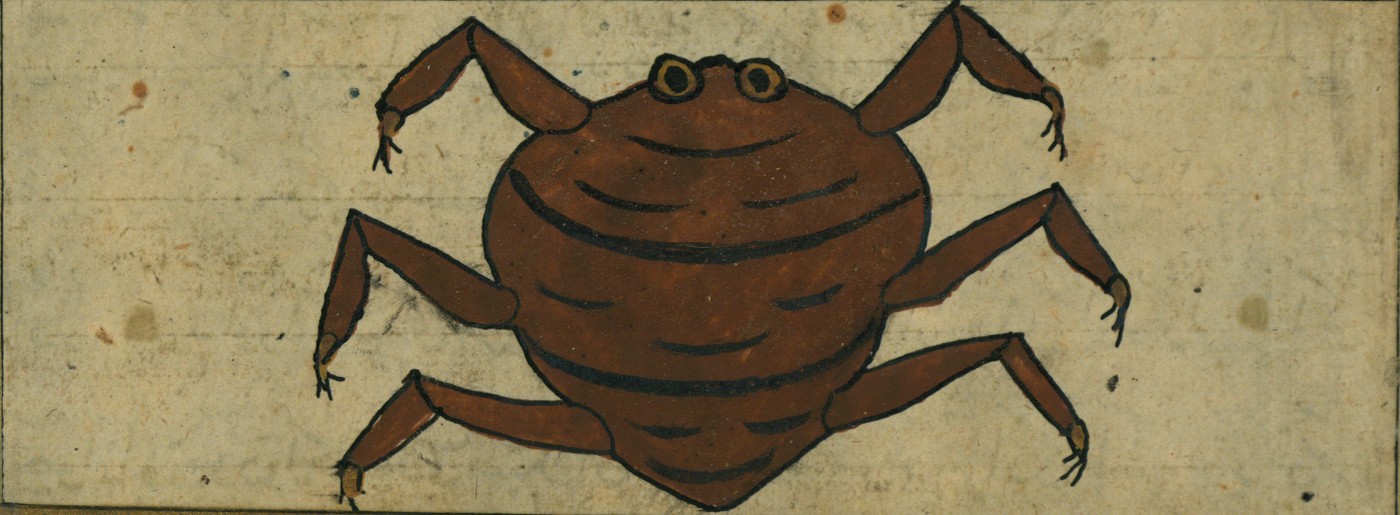
The sea crab has the form of seven snakes whose heads are one; it is a creature of strange shape. The Shaykh al-Ra'is (Avicenna) says: if its bone is burnt and ground and smeared on white leprous patches (bahak), it removes them; rubbed on the teeth, it whitens them; and it is good for mange as well.*2
The skink (saqanqur): the Shaykh al-Ra'is says it is the water lizard. It is caught in the Nile of Egypt, and they say it is descended from the crocodile. Taken out of the water, it does not die as a fish does but stays alive. It is hunted(?) in the days of spring. By one account it is the young of the crocodile: when the young hatch from the egg, the one that falls into the water becomes a crocodile, and the one that stays on land becomes a skink.*3
It is told that if a skink bites someone and that person rubs the bitten place with his spittle before the skink gets into the water, the skink dies. But if the skink gets into the water before he rubs it, that person h[...].
The skink increases sexual potency, especially if it was caught in its rutting days. The larger it is, the stronger its property. The Shaykh al-Ra'is says: if a person eats the flesh around a skink's navel, his potency increases so much that in a way…
* Needs human approval · 3
- *1line 1
کلاونother readings:دوکلان (dökülen),کلمیان (gelmeyen)Harfler açıkça ک ل ا و ن; 'meyvesi kelâvun ağaca' anlamsız. Kazvînî'nin yengeç asılınca meyvenin artması/dökülmemesi bilgisi 'meyvesi dökülen' ya da 'meyve vermeyen' ağaç istiyor, ama yazılan bunlardan birine benzemiyor. Arapça asılla karşılaştırılmalı. - *2line 5
چوقother readings:یوق (yok)İlk harfin altında iki nokta seçiliyor (چ için üç gerekir, ی için iki); baş biçimi ج/چ'ye benziyor. 'Ağlaması çok olur' tılsım bağlamına ters düşüyor; 'ağlaması yok olur' daha anlamlı. Anlam tersine döndüğü için insan kararı gerekli; Arapça asılla bakılmalı. - *3line 9
اولاسیother readings:آولاسی (avlası),اولماسیا و لا و? سی; üstünde uzun bir çizgi. 'avlası (avlanması) bahar günlerinde sayd olunur' anlamı tahmin; kelime biçimi Türkçede yerleşik değil.
Resolved or approved · 14
- resolvedline 1
اولدکه … بهادد شکوفه زایامندهother readings:اولدرکه … بهارده شکوفهزار ایامندهÇÖZÜLDÜ: ر=د alışkanlığı (oldur ki, bahârda); 'زایامنده' ز ا ی ا م ن د ه, şükûfezâr eyyâmında'nın ر'si düşmüş biçimi; anlam 'çiçek açma günlerinde' kesin. - resolvedline 2
نصلی اخراج ایدهother readings:نصل اخراج ایدرÇÖZÜLDÜ: nasl = temren (ok/mızrak ucu); yara üzerine bağlanınca temreni çıkarır. Son kelime çerçeveye dayanıyor, ایده/ایدیه gibi görünüyor; cümle sonu olduğundan 'ider' anlamında okundu. - resolvedline 3
عقاریبother readings:عقاربÇÖZÜLDÜ: fazladan ی ile yazılmış; 'akârib (akrepler), hayyât ile birlikte sokma bağlamı. - resolvedline 4
کوده … برخرقهother readings:کوره … بر خرقهÇÖZÜLDÜ: ر=د alışkanlığı (göre); 'bir hırka(ya)' bitişik yazılmış, hırka = bez parçası. - resolvedline 5
یدی یلان شکلیدرother readings:بری ... (?)ÇÖZÜLDÜ: her iki kelimede altta ikişer nokta açık: yedi yılan. İçerik tuhaf (deniz yengeci yedi yılan biçimli, başları bir) ama yazı net; resim sıradan bir yengeç. - resolvedline 6
شیخ دئیسother readings:شیخ رئیسÇÖZÜLDÜ: L6, L8 ve L16'da ر=د alışkanlığı; glossary 'شیخ رئیس' (171b'de de شیخ دئیس). - resolvedline 6
کموکیother readings:کمیکیÇÖZÜLDÜ: kemügi (kemiği); yakılıp dövülme bağlamı. - resolvedline 7
ودندانر سولسهother readings:ودندانه سورلسهÇÖZÜLDÜ: ن'den sonra ر/ز benzeri bir çizgi, sonra سولسه; ر yer değiştirmiş görünüyor. 'dendâna sürülse beyâz ider' (dişe sürülse beyazlatır) bağlamı açık. - resolvedline 10
بهاد … اولندر … دوایتده … یاودوسیدرother readings:بهار … اولنور … روایتده … یاوروسیدرÇÖZÜLDÜ: ر=د alışkanlığı (bahâr, rivâyetde, yavrusıdır); 'اولندر' olunur (و düşmüş, ر=د). - resolvedline 11
یمرطهدنother readings:یومرطهدنÇÖZÜLDÜ: yumurtadan; suya düşen timsah, karada kalan sakankur. - resolvedline 13
اصروغی … سوردسهother readings:اصردوغی … سورسهÇÖZÜLDÜ: ısırduğı (د düşmüş) ya da ısırığı; sürse. Anlam: ısırılan yeri tükürükle sürerse. - resolvedline 14
سورمزدنother readings:سعرمزدنÇÖZÜLDÜ: ikinci harf ع/و arası; L13'teki 'sürse' ile koşut: sürmezden evvel. - resolvedline 14
ه[...]other readings:هلاکÇÖZÜLDÜ: kelimenin üstünde mürekkepli parmak izi; yalnız ه ve altında silik dik çizgiler seçiliyor, ar'da [...] bırakıldı. L13'teki 'sakankur helâk olur' ile koşut: 'o kişi helâk olur' (ölür) anlamı kesine yakın. - resolvedline 15
نرقدرکه … هیجانیother readings:نه قدرکهÇÖZÜLDÜ: 'ne kadar ki' (ه ر gibi yazılmış), L16 'ol kadar' ile koşut. heyecân = kızışma (çiftleşme mevsimi).