Folio 155a
…Sarandib, where Adam (peace be upon him) came down to earth, is on that island; the traces of his blessed foot are still there, and people visit them. It is an island rich in fruit and rivers, with a temperate climate. The radiant tomb of Adam (peace be upon him) is also on that island. There are several kings on it; they are hostile to one another and are forever at war and strife.
The Island of Salahit
It lies between India and China. Its fruits and grains are abundant and its springs and rivers many. Merchants buy cinnamon, brazilwood, sandalwood, cloves, spikenard and other fine spices from that island. Mines of precious stones are also found there.
The Island of Hanah
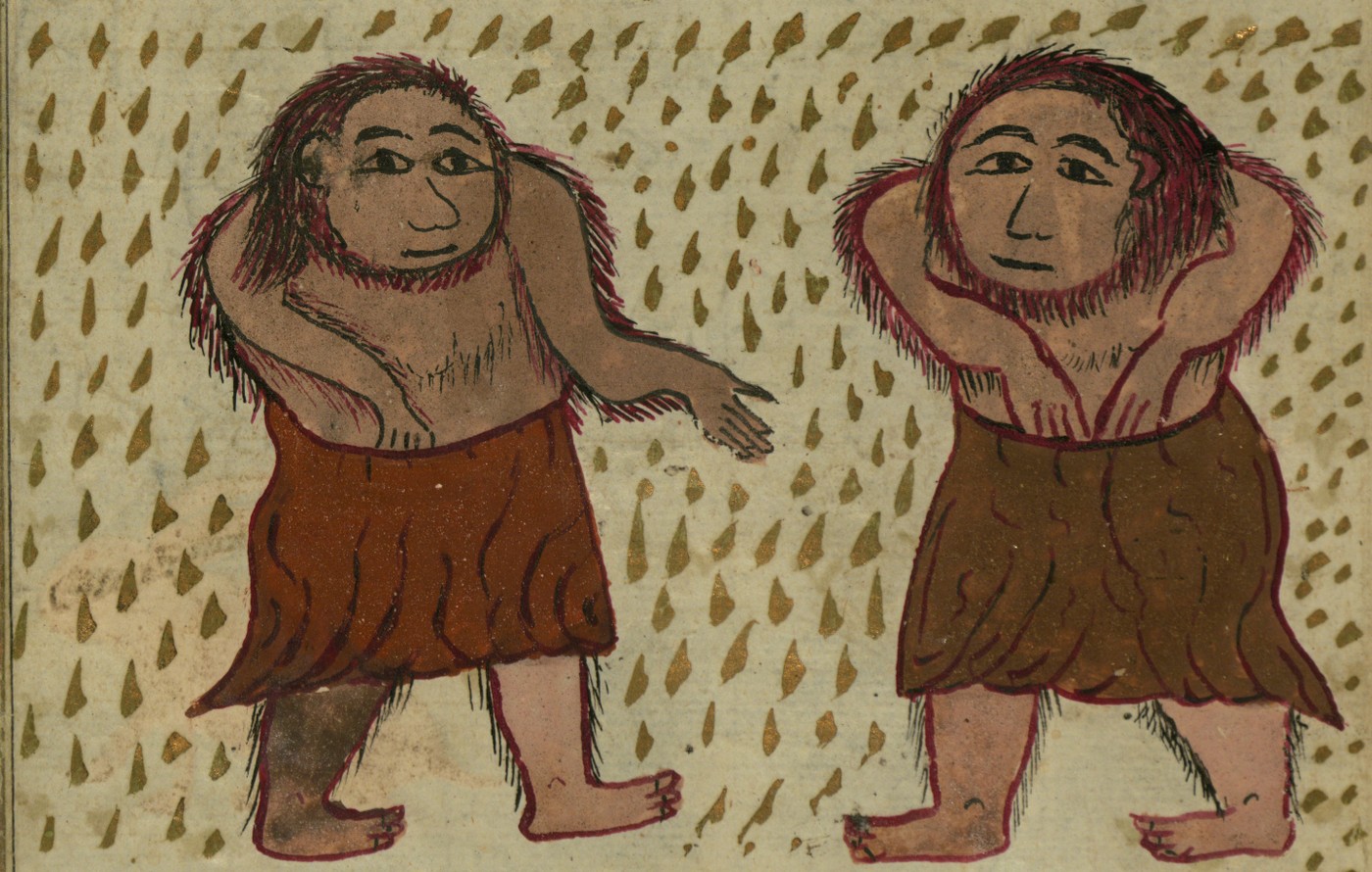
It has a mountain on which a great fire is seen by night and smoke by day. Because of the multitude of snakes no one can approach it. A people live there whose faces are on their chests; they have no necks. They deal with other people and buy and sell. Aloeswood, cloves, coconuts, bananas and sugar cane are brought from that island. And this is their picture.
The Island of Takalush(?)*1
Its people are naked and wear no clothes. Their food is fresh fish and coconut, and their wealth is iron. Its people bring iron to the ships(?) and trade.*1*2
The Island of Tannin*2
A vast island, with many cities and fortresses, lofty mountains and fruit-bearing trees…
continues on fol. 155bIn every city there is a great wall in…* Needs human approval · 2
- *1line 12
تكالوشother readings:لنكبالوس,لنجبالوسKırmızı ada adı net: ت-ك-ا-ل-و-ش. Çıplak halk, taze balık, hindistancevizi ve demir ticareti Kazvînî'nin Lankabâlûs/Lancabâlûs (Nikobar) adasını hatırlatıyor; yazılış bunun bozulmuş hâli olabilir. Ad harfiyen korundu; eşleştirme bir insanın onayını bekliyor. - *2line 13
اهلي سفينه لره حديد كتوروبother readings:ehl-i sefîne (onlara) hadîd getürüpOkuma net ama anlam belirsiz: 'halkı gemilere demir getirip/götürüp' mi, yoksa 'gemi ehli (onlara) demir getirip' mi? كتوروب hem getirip hem götürüp okunabilir. Kazvînî'nin Lankabâlûs anlatısında demiri gemilerle gelen tüccarlar getirir; bu doğrulanmadı. Çeviri harfî okumayı (?) ile verdi.
Resolved or approved · 7
- resolvedline 3
واردرother readings:وآددرÇÖZÜLDÜ: Yazılışı وآددر gibi; bu elin ر harfi د'ye benziyor (152b notu: دوایت=روایت). 'birkaç melik vardır' anlamı tek mümkün okuma. - resolvedline 4
سلاهطÇÖZÜLDÜ: Satır sonunda yer kalmadığı için ه ve ط satırın üstüne yazılmış; harfler net. Kazvînî'nin Çin Denizi adalarından Salâhit (جزيرة سلاهط) ile örtüşüyor: sandal, sümbül, karanfil burada sayılıyor. - resolvedline 7
حانهother readings:خانه,جابه,جاوهÇÖZÜLDÜ: Kırmızı ada adı açıkça ح-ا-ن-ه yazılmış, ح'de nokta yok. Walters kataloğu bu varağın resmini 'Two neckless inhabitants of Ḥānah Island' diye adlandırıyor; okuma ve resim örtüşüyor. - resolvedline 7
واردرother readings:وادددÇÖZÜLDÜ: Satır sonunda yan yana üç د biçimli harf; bu elde ر'ler د gibi yazılıyor. 'bir tağ vardır' bağlamı kesin. - resolvedline 9
كردانلريÇÖZÜLDÜ: gerdân = boyun. Altındaki resim de boyunsuz, yüzleri göğüslerinin üstünde iki figür gösteriyor. - resolvedline 10
موزother readings:موÇÖZÜLDÜ: Satır sonunda yer kalmadığı için ز (noktalı) satırın üstüne çıkmış. Hindistancevizinin yanında 'muz' doğal; Tennîn öncesi adalarda da muz geçiyor (154a sözlük). - resolvedline 13
اموالّريother readings:اموالريÇÖZÜLDÜ: ل üzerinde şedde var; emvâl + -leri ('malları'). Şedde, iki ل'yi gösteren yazım alışkanlığı; harfiyen korundu.