Folio 172a
…However hard they tried, nothing could be understood of his speech or his signs. The king treated him with honour, and they married him to a woman. They lived together for a time and had a child. Day by day the child grew, and came to be able to explain his father's language. They brought him before the king.
The king asked: 'What does your father say?' The child said: 'How strange: every animal has its tail behind it, but man has his on his head' — that is, he likens the beard to a tail. And this is his picture.
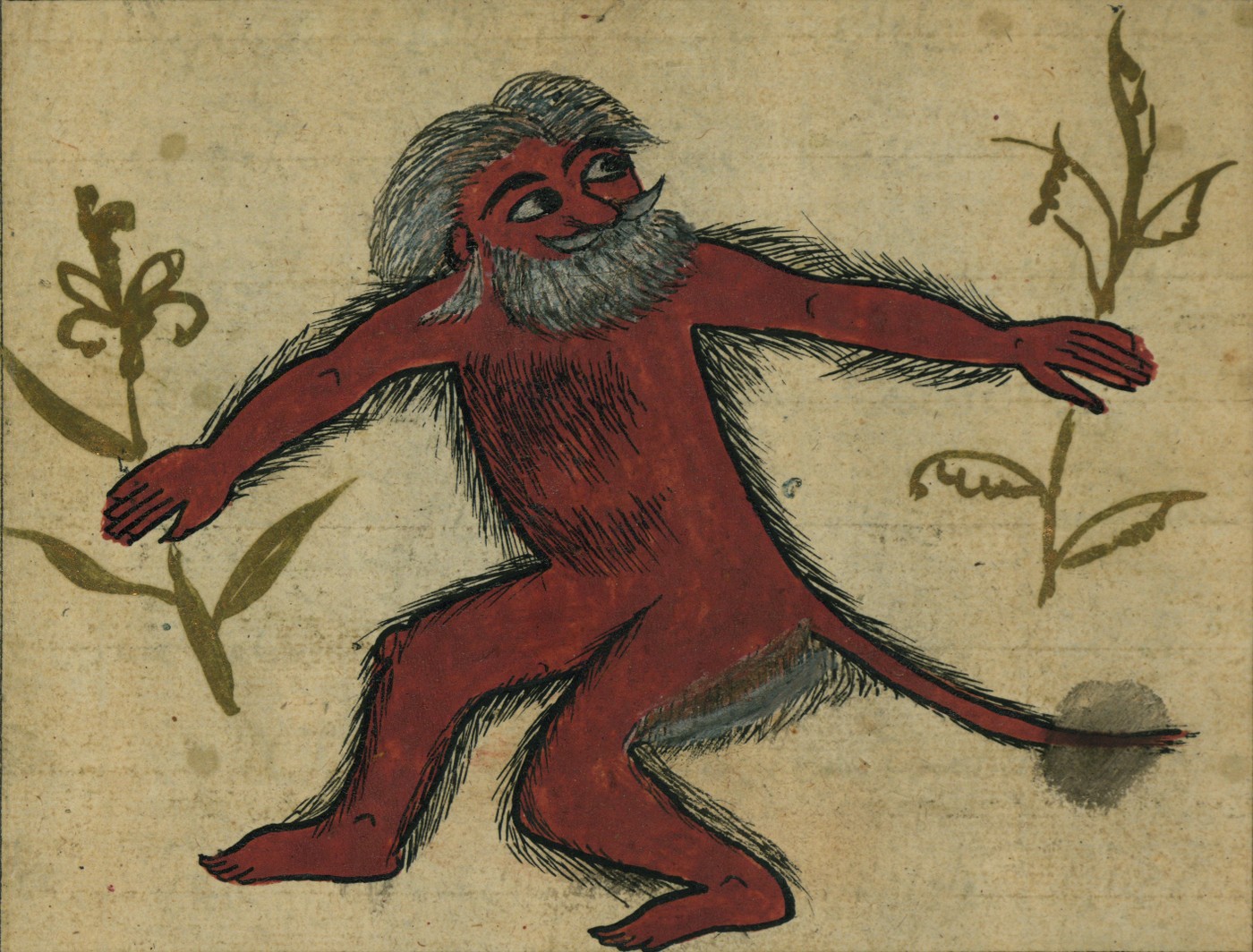
The sea-cow (baqar al-ma'): It is related that it comes out of the water and grazes in the pasture(?), and that its dung is ambergris, found on the seashore. This report is not true.*1
For ambergris grows like a mound on the sea floor; the sea tears it loose and brings it up to the surface. Sailors know its time and season, and go and gather it. Some say that ambergris is a thing like tar that flows, and becomes ambergris when it hardens. Its property is that it benefits the brain and the senses; and it has a wondrous power: it penetrates(?) strongly(?) into the substance of the spirit. And this is its picture.*2*3
* Needs human approval · 3
- *1line 6
مرعیother readings:مرعیده (mer'âda),مرعی (mer'â)مرعی kelimesinin üstünde iri bir ek işaret var (ه/م/ده gibi görünüyor); 'mer'âda' için satır üstü düzeltme olabilir. Okuma 'otlakta otlar' olarak alındı, ama işaretin ne olduğuna insan baksın. - *2line 11
قوی نفوتیother readings:قوی نفوذی (kavî nüfûzı),قوتی (kuvveti),فنیYakın zum: ilk kelime ف/ق + diş + ی (noktalar karışık), ikincisi ن ف و ت ی; ذ yerine ت gibi noktalanmış. 'cevher-i rûha kavî nüfûzı vardır' (ruhun cevherine güçlü nüfuzu var) anlamlı, ama harfler kesin değil. Never guess: insan okumalı. - *3line 11
فهذه صورتهother readings:amberin resmi,su sığırının resmiAltındaki ikinci resim yalnız çiçekli bitkiler ve bir öbek ot gösteriyor, hayvan yok. Rubrik amberi (deniz dibinde biten) mi, su sığırını mı (otlak) kastediyor, belli değil; Walters dizini bu resmi listelemiyor. Caption ve en buna göre tarafsız yazıldı.
Resolved or approved · 8
- resolvedline 1
ولقدرother readings:و اول قدر (ve ol kadar),ولقد (Ar. ve lekad)ÇÖZÜLDÜ: açıkça و ل ق د ر yazılmış; elifsiz 've ol kadar' okundu ('o kadar uğraştılar ki'). Ar. 'ولقد' + fazladan ر da olabilir; anlam değişmiyor. ar yazıldığı gibi. - resolvedline 1
متفهمother readings:مفهوم (mefhûm),متفهم (mütefehhim)ÇÖZÜLDÜ: yakın zum: م ت ف ه م. 'bir nesne mütefehhim olmadı' = hiçbir şey anlaşılmadı; Kazvînî'deki 'anlamaya çalıştılar, anlayamadılar' ile uyumlu. Kelime kullanımı biraz tuhaf, ama okuma açık. - resolvedline 1
اکرام ایتدیÇÖZÜLDÜ: özne yazılmamış; 171b'deki hükümdar (melik, L3'te geçiyor) olarak alındı. - resolvedline 3
حضودنهother readings:حضورنه (huzûrına)ÇÖZÜLDÜ: ر, د gibi yazılmış (bu elin alışkanlığı); 'melik huzûrına getürdiler'. - resolvedline 6
دوثیother readings:روثی (ravsı, tersi/dışkısı)ÇÖZÜLDÜ: ر, د gibi yazılmış; Kazvînî'de su sığırının 'ravs'ının amber olduğu rivayeti geçer, cümle 'tersi amberdir, deniz kıyısında bulunur' ile tamamlanıyor. - resolvedline 8
تلّother readings:تل (tell, tepe),تیلÇÖZÜLDÜ: yakın zum: ت ل üstünde şedde; 'tell gibi nebt idüb' = tepe gibi biter. - resolvedline 8
ملاحین وقت زماننÇÖZÜLDÜ: 'mellâhîn vakt-i zamânın' + L9 'bilüb varub cem' iderler'; زمانن'ın kuyruğu aşağı satıra uzanıyor. - resolvedline 11
واردنother readings:واردر (vardır)ÇÖZÜLDÜ: son harf noktalı ن gibi; bağlam 'vardır' istiyor (aynı satırın başında 'واردد'). ar yazıldığı gibi bırakıldı.