Folio 173b
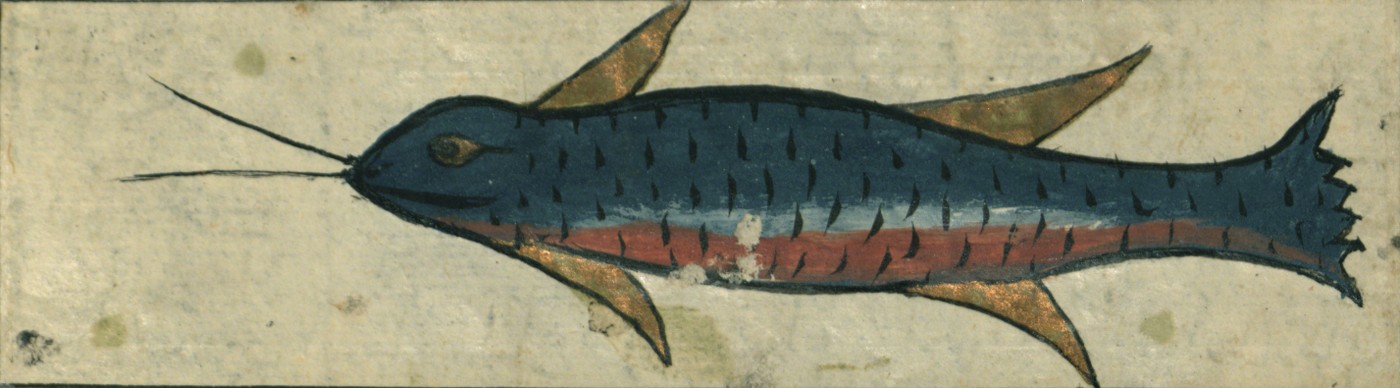
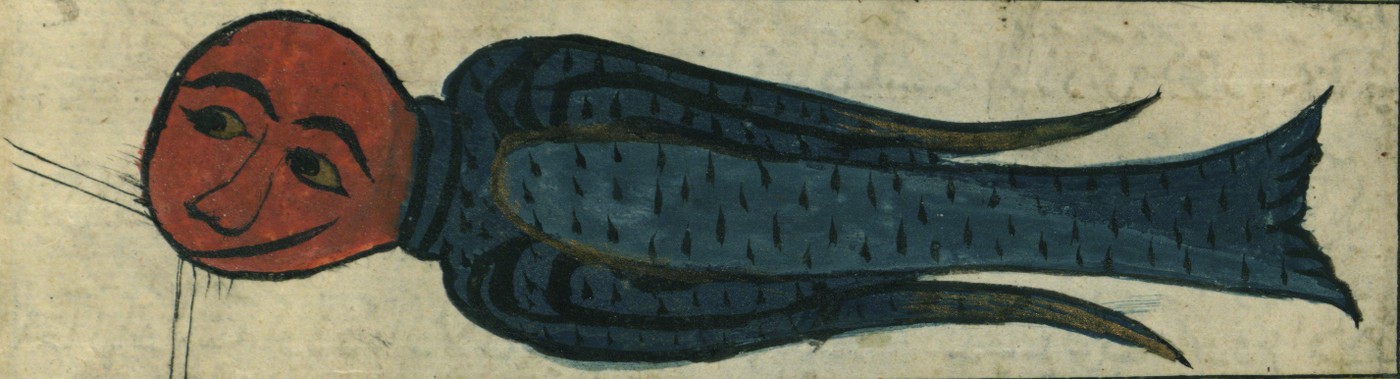
The Dolphin
The dolphin is a blessed animal; when sailors see it, they take it as a good omen. If it sees a man drowning, it goes beneath him and pushes him to the shore. If it sees a dead body, it always carries it to the shore. Its head resembles a human head and its body is a fish. This is its picture.
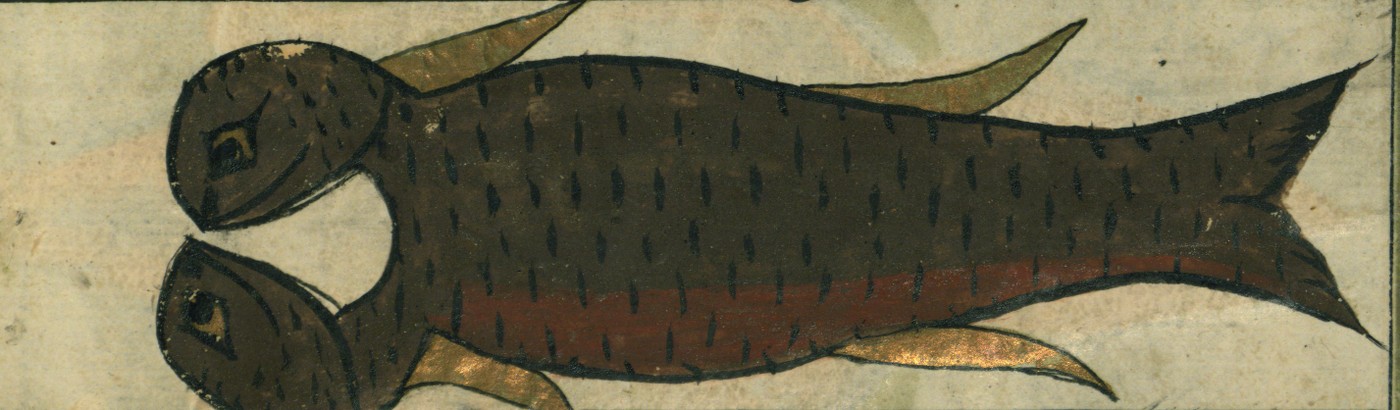
The Dubiyan(?)*1
The dubiyan(?) is a kind of fish; it has two heads, like a bird's head. Its body is a fish. If its flesh is laid on an arrowhead [lodged in the body], it draws it out at once. It increases sexual potency and is good for slackness of the member. And this is its picture.*1
The Crab (saratan)
The saratan is called yengeç (crab) in Turkish. It has no head; its eyes are on its shoulders and its mouth is in its chest. It has eight legs and walks on one side. Seven times a year its skin is renewed. The place where it lives has one door opening onto the water and one onto the land. When its skin is shed, it shuts the door opening onto the water so that its enemies cannot get in, and leaves the door onto the land open so that the air may enter and its skin grow thick. When its skin has thickened, it opens the door onto the water and goes about its livelihood…
continues on fol. 174aIts properties are these: if a crab is taken…* Needs human approval · 2
- *1line 4
دوبیانother readings:ذوبیان,ذو [...]Kırmızı başlık yakın zumda د و ب ی ا ن okunuyor; ilk harfin üstünde ötre var, ذ noktası görülmüyor. Kazvînî'deki karşılığı belirlenemedi; alfabetik sırada دلفین ile سرطان arasında olması د ve ذ'ye de uyuyor. Okunuş (Dûbiyân/Zû-beyân) ve hangi canlı olduğu bir insanın kararı. - *2line 13
خواصیother readings:خوصی,خاصهسیİşaret kelimesi alt çerçevenin altında, küçük ve sıkışık: خ و ص ی açık, خ'nin solunda yukarıda elif/med gibi bir çizgi var. 'havâssı' (hassaları) yengeç faslının devamına uyuyor, ama 174a'ya bakılmadan doğrulanamadı.
Resolved or approved · 7
- resolvedline 1
ر/دother readings:سورد=سورر,کتورد=کتورر,بالقدد=بالقدر,اولود=اولور,یودد=یورر,قود=قور,اوله یود=اوله یور,صددنده=صدرنده,اوزدینه/اوزدنده=اوزرینه/اوزرندهÇÖZÜLDÜ: bu elin ر'yi د gibi yazma alışkanlığı (152b). Zumla bakıldı: düz, satır çizgisinde kalan ve cezmli harfler ar'da د olarak korundu (L2 سورد, یود; L3 کتورد, بالقدد; L4 بالقدد; L5 اوزدینه; L7 اوزدنده; L8 صددنده, اولود, اوزدینه, یودد; L11 قود); aşağı inen ر'ler ر yazıldı (ایدر, ایدرلر, نافعدر). translit ve gloss her yerde r okur. ز/ذ: L5 ve L7'de üstü noktalı harf د gövdeli, önceki varaklar gibi ز yazıldı. - resolvedline 2
اوله یودother readings:اولور,اولهیورÇÖZÜLDÜ: 'bir âdem gark olayor' = bir adam boğulmakta; son harf ر yerine د biçiminde. Kazvînî'deki 'boğulanı kıyıya iter' anlatısıyla örtüşüyor. - resolvedline 3
فهذه صورتهother readings:yunusun resmi,zâmûrun resmiÇÖZÜLDÜ: Sayfada üç resim var. En üstteki (bıyıklı mavi balık) 173a L14'teki 'ف/وهذه صورته' (zâmûr) ile; ortadaki insan yüzlü balık L3 'باشی انسان باشنه مشابه' ve 'فهذه صورته' ile yunus; alttaki iki başlı balık L4 'ایکی باشی' ve L6 'وهذه صورته' ile dûbiyân(?). Walters başlığı 'Three fish'. - resolvedline 4
طیر باشی کبیother readings:[...] باشی کبیÇÖZÜLDÜ: zumda ط ی ر açık. Resimdeki iki baş gagaya benzer sivri ağızlı; 'kuş başı gibi' resme uyuyor. - resolvedline 5
لحمی اوق دمرنی اوزدینه قوسهother readings:لحمی ... اوزرینه قوسهÇÖZÜLDÜ: 'ok demürini üzerine kosa' yazılışı belirsiz değil; anlam: eti, bedene saplı ok temreni üzerine konursa onu çıkarır (Kazvînî'de yaygın 'temreni çeker' hassası). Gloss/prose 'saplanmış' sözünü köşeli ekle verir. - resolvedline 9
یرکother readings:یورک (yuvanın),یزکÇÖZÜLDÜ: zumda ی ر ک; ر'nin üstünde küçük bir leke var, ز noktası değil. 'sâkin olduğı yerüñ' (yaşadığı yerin) anlamı tam. - resolvedline 10
ایدرother readings:آچر (açar)ÇÖZÜLDÜ: L9 sonu 'bir kapusı karaya' + L10 'ider' = yapar/açar; yazılış açık ایدر, gloss 'açar' diye anlamı verir.